6 June 2026 · 2 min read
A Hausa-Fulani wedding, from kayan lefe to walima
The gifts, the henna night, the Fatihah and the feast. A respectful guide to the customs of a Northern Nigerian Muslim wedding.
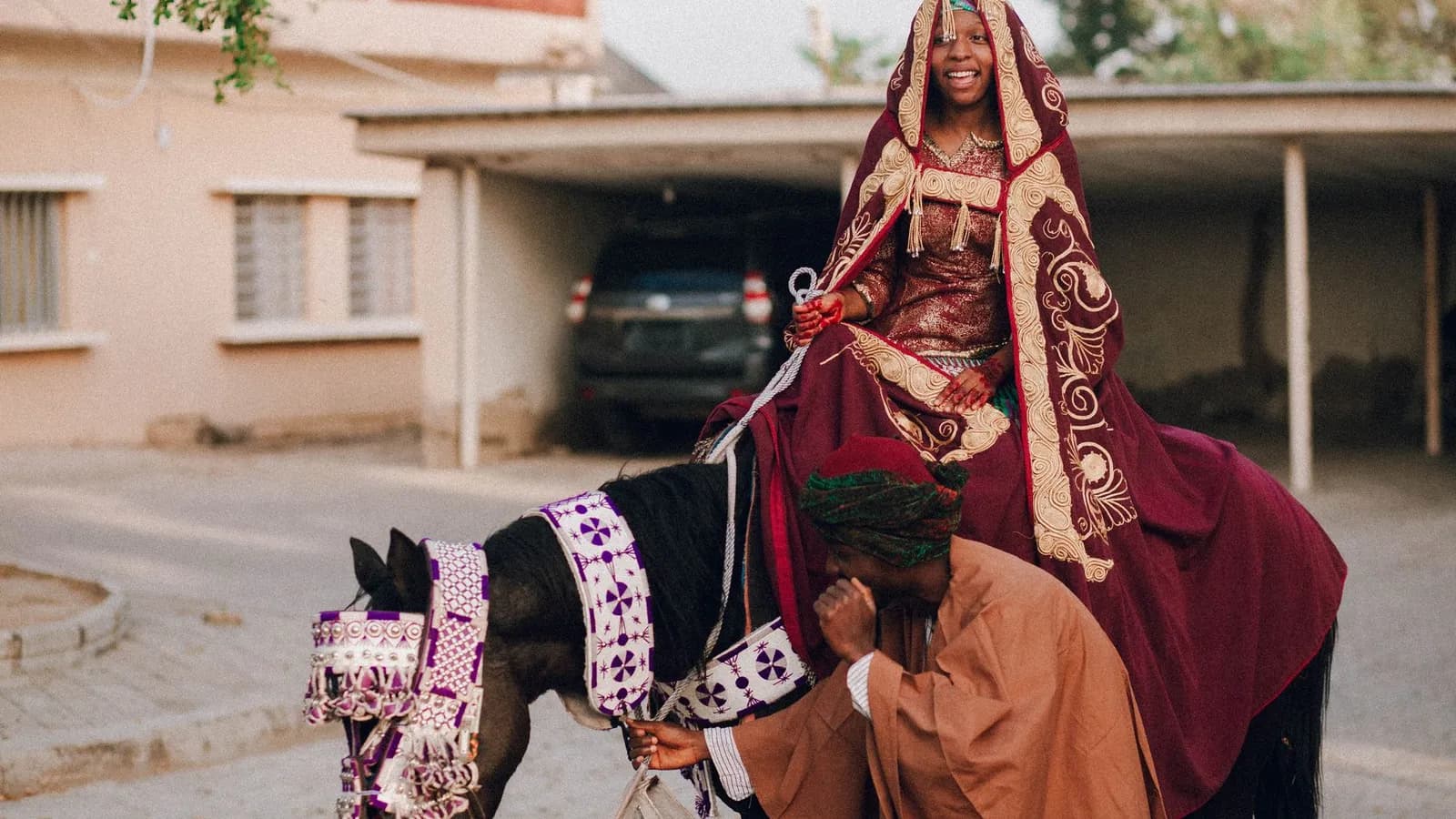
A Hausa-Fulani wedding is a Muslim celebration, unhurried and deeply rooted in faith and family. It unfolds over several days, each with its own quiet purpose, building to a joyful feast.
Kayan lefe: the groom's gifts
Before the wedding, the groom sends kayan lefe, a grand gift to his bride, carried to her home by his female relatives. It typically includes clothes, shoes, perfumes, jewellery, and importantly a copy of the Holy Qur'an and a prayer mat. It's a statement of provision and commitment.
Wuni: the henna night
The wuni, or sa lalle, is a ladies-only evening for the bride. Her friends and female relatives gather to spend her last hours as a single woman together, and henna (lalle) is used to paint intricate designs on her hands, palms and feet. It's music, food, laughter and a little bittersweetness. The days of preparing and adorning the bride are known as kunshi.
Fatihah: the solemnisation
The Fatihah is the heart of the marriage, the Islamic solemnisation. The dowry, the sadaki, is settled, and a representative from each family exchanges the vows before a religious leader and the gathered guests, with prayers offered for the couple. It's short, sacred and often held at the mosque; the women are usually elsewhere, preparing the bride.
Walima: the feast
The walima is the reception, held after the Fatihah. Depending on the families it can be a whole day of food, colour and celebration for friends, family and well-wishers. Expect striking traditional dress, generous hospitality, and a warm, dignified joy.
A note for guests
- It's an alcohol-free celebration, with plenty of soft drinks, zobo and food instead.
- Modest dress is appreciated, covered shoulders, longer hems, and headscarves for ladies at the mosque.
- Come with prayers and good wishes; duas for the couple mean a great deal.
Across borders
For Northern families spread between Kano, London and beyond, keeping the kayan lefe, the wuni, the Fatihah and the walima clear and coordinated is half the battle. One link, per-event details and timings in every guest's own timezone keeps the whole thing calm and connected.